

SWESD: Mitigate Shock Static Risks With Industrial ESD Racks & ESD Box Solutions
static-shock
esd-rack
esd-box
SWESD helps facilities minimize shock static dangers with certified ESD racks, durable ESD box systems and science-backed static control guidance.
YUEQING, ZHEJIANG, CHINA, July 13, 2026 /EINPresswire.com/ -- Static discharge is a universal phenomenon most people encounter as a minor, startling jolt when touching a metal doorknob after walking across carpet. In industrial settings such as electronics manufacturing, semiconductor packaging and aerospace production, however, Shock Static events pose far greater risks: they can damage sensitive microchips, cause costly product failures, and even create fire hazards in flammable environments. For over 35 years, SWESD (Sanwei) has been a global leader in electrostatic discharge (ESD) solutions, combining in-depth technical expertise with a full portfolio of static control products to help facilities eliminate static-related risks across every stage of production and storage.1.Understanding Shock Static: Causes, Impacts and Industrial Risks
Shock Static (static electric shock) occurs when accumulated static electricity on a surface discharges rapidly upon contact with a conductive object. This charge buildup, known as triboelectric charging, happens when two different materials rub together and exchange electrons — for example, rubber-soled shoes on carpet, synthetic fabrics against work surfaces, or plastic components moving through production lines. When the charged person or object touches a grounded conductor, the built-up voltage releases instantly, creating the familiar shock sensation.
Several factors increase the likelihood and severity of static shock events:
Low humidity: Dry air prevents static charges from dissipating naturally, making buildup far more common — especially in winter months when indoor heating reduces moisture levels.
Synthetic materials: Polyester, nylon, rubber and most plastics generate and hold static charge much more readily than natural fibers like cotton.
Friction and movement: Material handling, component transport and personnel movement across workspaces all create constant friction that accumulates static charge over time.
While everyday static shocks are mostly harmless to humans (despite being uncomfortable), industrial environments face far more serious consequences. A single static discharge can destroy sensitive integrated circuits, cause latent defects that reduce product lifespan, and ignite flammable vapors or dust in chemical or manufacturing settings. For electronics and semiconductor facilities, static-related damage accounts for billions in annual losses worldwide, making proactive static control a critical operational priority.
2.ESD Racks: Grounded Storage Systems to Neutralize Static Shock at the Source
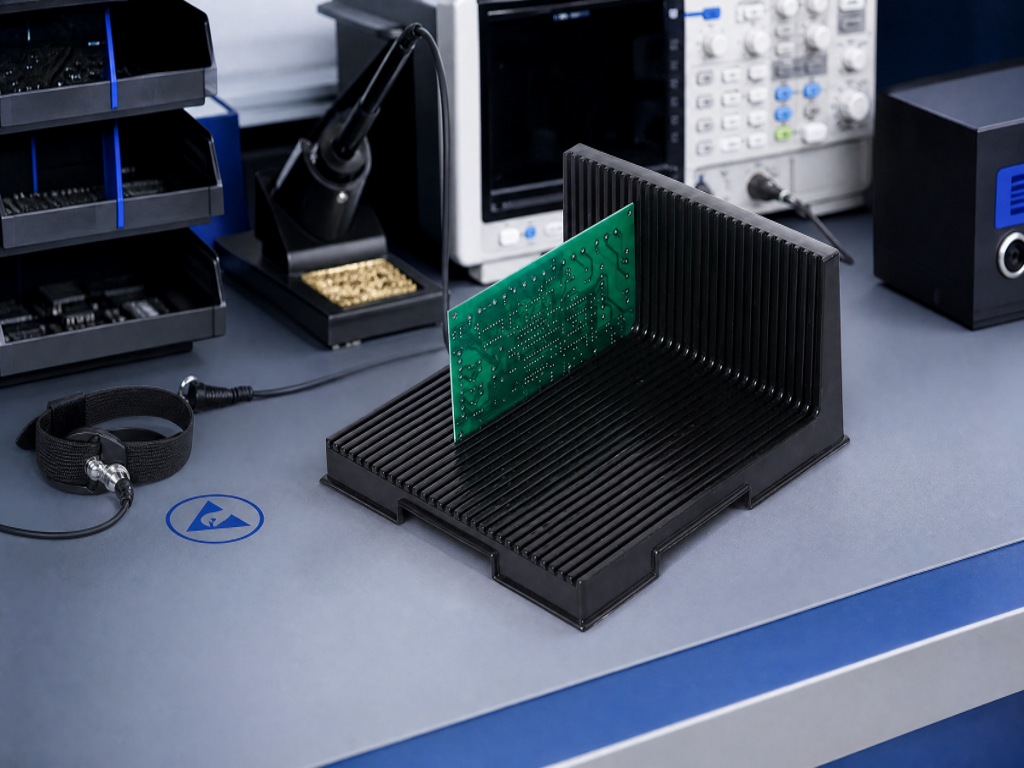
The foundation of any effective industrial static control program is consistent, grounded storage for ESD-sensitive components and assemblies. ESD Racks from SWESD are engineered to provide continuous static dissipation across entire storage systems, preventing charge buildup that leads to damaging shock static events.
SWESD offers a comprehensive range of ESD rack models to fit diverse workspace layouts, load requirements and application needs:
Entry-level series: 3W-9805401, 402, 402A and 403 models, ideal for general workstation storage and line-side kitting areas
Medium-duty series: 3W-9805403-2, 404, 404-2 and 405 models, designed for warehouse bulk storage and assembly department use
Heavy-duty extended series: 405-1, 406, 406-2, 406-3, plus 407, 408 and 409 models, built for heavy loads and custom-configured storage systems
Constructed with powder-coated steel frames and fitted with ESD conductive casters, each rack maintains full electrical continuity throughout the structure. A dedicated 10mm grounding stud allows easy connection to a facility's common ground point, ensuring any static charge from components, boxes or personnel is safely dissipated before it can build to dangerous levels. Shelves are adjustable in 25mm pitch increments, allowing teams to configure storage space to fit different component sizes, ESD bins and production fixtures. Load capacities range from 50kg to 150kg per shelf depending on the model, supporting everything from lightweight SMT components to heavy assembly fixtures.
The modular design supports both free-standing floor installation and wall-mounted configurations, making them suitable for production lines, warehouses, R&D laboratories and cleanroom environments. When used as part of a complete ESD storage system, these racks eliminate one of the most common sources of static shock buildup in industrial facilities: ungrounded storage surfaces that accumulate charge as components are moved and handled.
3.ESD Box: Durable Turnover Solutions for Static Control During Handling & Transport
While stationary storage systems prevent static buildup at rest, component handling and inter-department transport create constant friction that generates new static charges. ESD Box solutions from SWESD provide permanent static dissipation for components in motion, ensuring shock static risks are controlled throughout the entire production workflow.
SWESD's ESD box portfolio includes two core product categories designed for different industrial use cases:
Rigid ESD Turnover Boxes
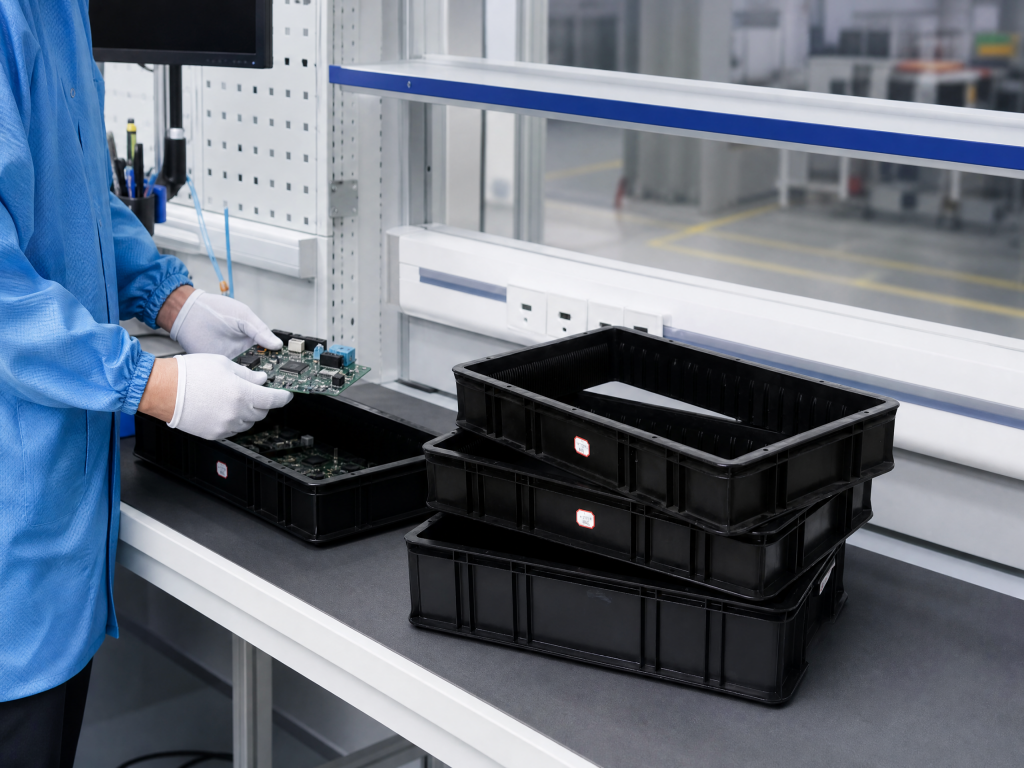
Available in standard industry sizes including 400(L)×300(W)mm and 600(L)×400(W)mm, these injection-molded boxes are built for repeated daily use on production lines and in warehouse storage. Manufactured from SWESD's proprietary static-dissipative polypropylene composite material, they feature permanent anti-static properties that maintain consistent surface resistance (10⁵ to 10¹¹ ohms) throughout their service life — unlike low-quality coated alternatives that flake, wear off and lose effectiveness over time. Their rugged, impact-resistant construction and stackable design make them ideal for component kitting, inter-department transport and bulk storage.
ESD Corrugated Boxes
Lightweight, cost-effective static-protective packaging designed for outbound shipping and logistics. These boxes provide reliable ESD protection for finished products and components during transit, preventing shock static damage that can occur as packages move through distribution networks. They are available in custom sizes to fit different product dimensions and shipping requirements.
All SWESD ESD boxes are fully compatible with the brand's ESD rack systems, creating a seamless, fully grounded static control ecosystem from storage to transport. They can be fitted with integrated label holders for part number identification and barcode inventory tracking, streamlining warehouse operations. For OEM and bulk order clients, custom sizes, compartment layouts and branding options are available, supported by SWESD's full in-house mold manufacturing capabilities.
All products are RoHS compliant and tested to meet IEC 61340-5-1 and ANSI/ESD S20.20 international standards, making them suitable for use in electronics manufacturing, telecommunications, automotive electronics and medical device production facilities worldwide.
4.Best Practices for Minimizing Static Shock in Industrial Facilities
Eliminating static shock risks requires a combination of proper infrastructure, protective products and operational best practices. Based on decades of ESD engineering experience, SWESD recommends the following strategies for industrial facilities:
Implement grounded ESD storage systems
Replace standard plastic or metal shelving with certified ESD racks and matching ESD boxes to ensure continuous static dissipation across all storage and handling points. This eliminates charge buildup on surfaces that come into contact with sensitive components.
Control indoor humidity levels
Maintain relative humidity between 40% and 60% where possible. Moisture in the air helps dissipate static charges naturally, reducing the frequency and severity of shock static events — especially during dry winter months.
Use personal ESD protective equipment
Require personnel working in ESD-sensitive areas to wear ESD wrist straps, heel grounders and static-dissipative footwear. This ensures personnel are continuously grounded, preventing charge buildup on the human body that can discharge onto components.
Regularly test surface resistance
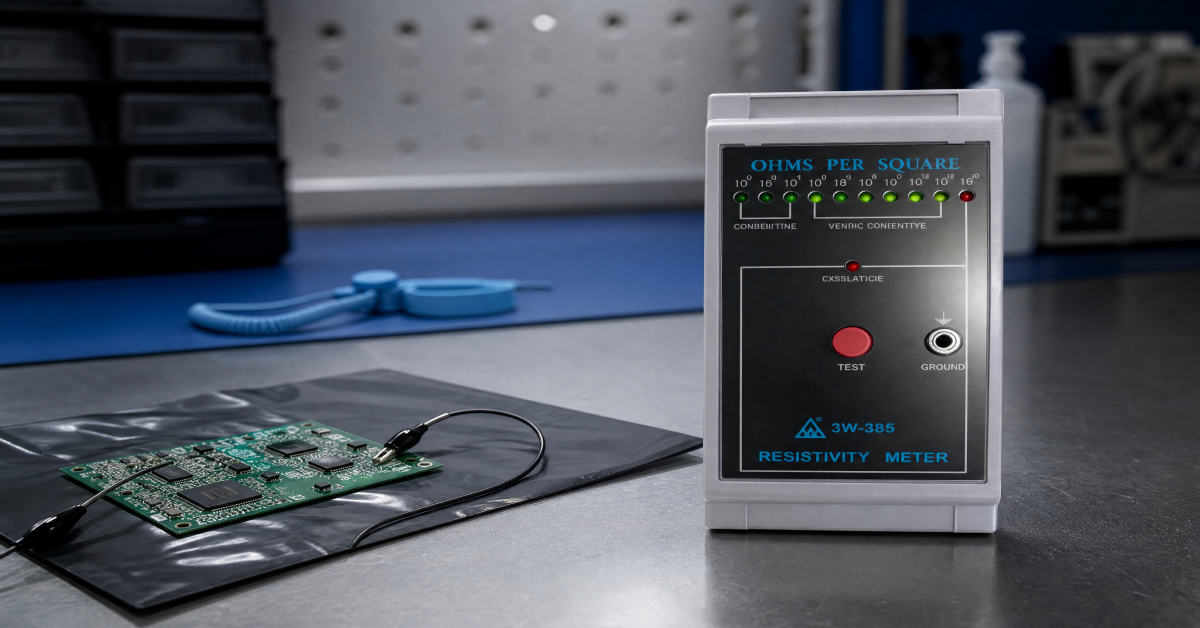
Use ESD surface resistance meters to test work surfaces, storage racks and flooring on a quarterly basis (or more frequently in high-traffic areas). Regular testing identifies worn or degraded materials before they lead to static damage events.
Choose static-dissipative materials
Replace synthetic fabrics, standard plastics and insulating materials with static-dissipative alternatives throughout the workspace. This reduces charge generation from friction during daily operations.
For more detailed scientific explanations of static electricity and additional prevention tips, facilities can reference SWESD's comprehensive technical guide on static shock.
5.Frequently Asked Questions
Q: What exactly is Shock Static, and why is it dangerous for electronics manufacturing?
A: Shock Static (or static electric shock) is the sudden discharge of accumulated static electricity that occurs when a charged object or person touches a conductive surface. While mostly harmless to people, these discharges can reach thousands of volts — enough to destroy sensitive microchips, cause latent product defects, and even ignite flammable materials in hazardous environments. For electronics manufacturers, static damage is a leading cause of product failure and warranty costs.
Q: What models of ESD racks does SWESD offer?
A: SWESD provides a full range of ESD rack series to fit different load and layout needs. This includes entry-level 3W-9805401/402/402A/403 models for workstation use, medium-duty 3W-9805403-2/404/404-2/405 models for warehouse storage, and heavy-duty extended 405-1 through 409 series for custom and high-load applications. All models feature fully grounded construction and 25mm-pitch adjustable shelves.
Q: What types of ESD box products are available for industrial use?
A: SWESD offers two core ESD box categories: rigid injection-molded ESD turnover boxes in standard 400×300mm and 600×400mm sizes for production line and storage use, and ESD corrugated boxes for shipping and logistics applications. All feature permanent static-dissipative properties that do not degrade over time, and custom sizes or configurations are available for bulk orders.
Q: How do ESD racks and boxes prevent static shock events?
A: ESD racks and boxes are made with static-dissipative materials that safely conduct electrical charges to a ground point, preventing charge buildup on surfaces. When properly grounded, they create an equipotential environment where components, containers and personnel are all at the same electrical potential, eliminating the sudden discharges that cause static shock and component damage.
Q: Can static shock be completely eliminated in industrial facilities?
A: While it is nearly impossible to eliminate all static electricity generation, proper ESD control systems can reduce static charge levels below the threshold that causes damage or safety risks. A complete program including grounded storage, personal protective equipment, humidity control and regular testing can reduce static-related damage by 99% or more in most industrial settings.
6.Conclusion
Static shock is more than a minor workplace annoyance — for electronics, semiconductor and aerospace facilities, it is a costly and potentially dangerous operational risk. Building an effective static control program requires both a solid understanding of static electricity principles and high-quality, certified ESD equipment designed for industrial use.
With over 35 years of ESD material R&D and manufacturing expertise, official participation in drafting national and military ESD standards, and a client roster including global industry leaders like Intel, Siemens and Motorola, SWESD is a trusted partner for facilities worldwide. Its comprehensive portfolio of ESD racks, ESD boxes and complementary static control products, combined with in-depth technical guidance, helps facilities of all sizes reduce static-related losses, achieve regulatory compliance and improve operational efficiency.
Whether you are upgrading your facility's ESD storage infrastructure, sourcing reliable static control packaging, or seeking expert guidance on static shock prevention, SWESD's technical team can provide tailored recommendations and end-to-end support. To explore the full product range, download technical datasheets or request a customized quote, visit the official SWESD website or contact the global sales team today.
Zhejiang Sanwei ESD Equipment Co., Ltd.
Zhejiang Sanwei ESD Equipment Co., Ltd.
+86 15257770643
export2@sanwei-esd.com
Visit us on social media:
LinkedIn
Instagram
Facebook
YouTube
TikTok
X
Other
Legal Disclaimer:
EIN Presswire provides this news content "as is" without warranty of any kind. We do not accept any responsibility or liability for the accuracy, content, images, videos, licenses, completeness, legality, or reliability of the information contained in this article. If you have any complaints or copyright issues related to this article, kindly contact the author above.
